How Morse code works
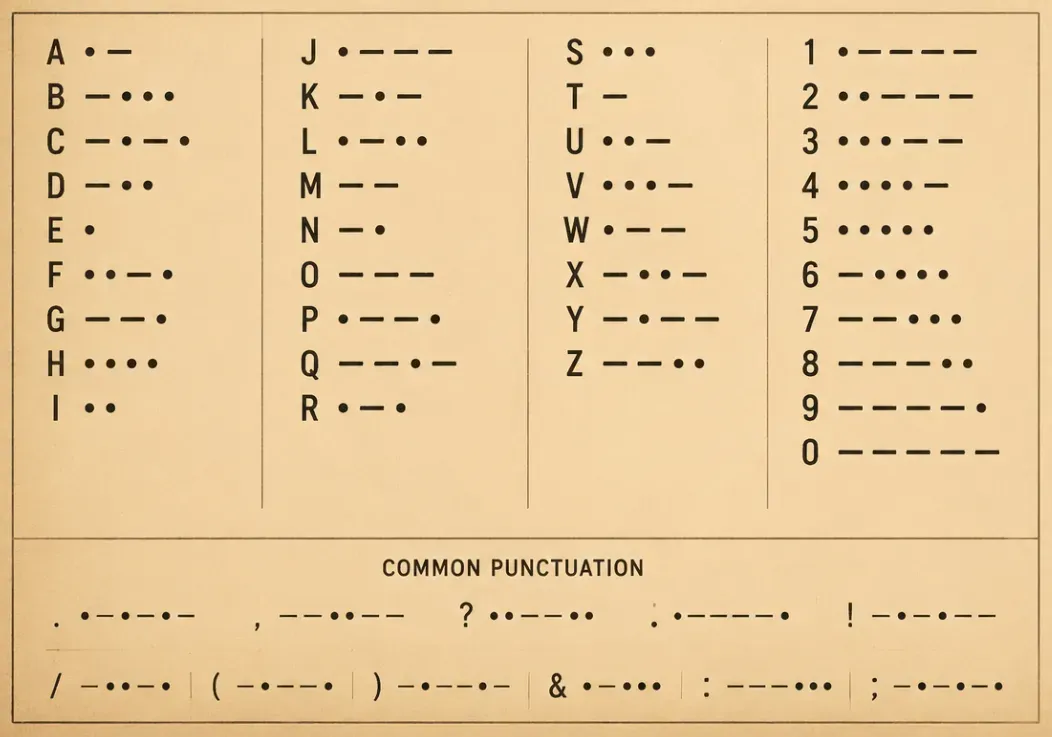
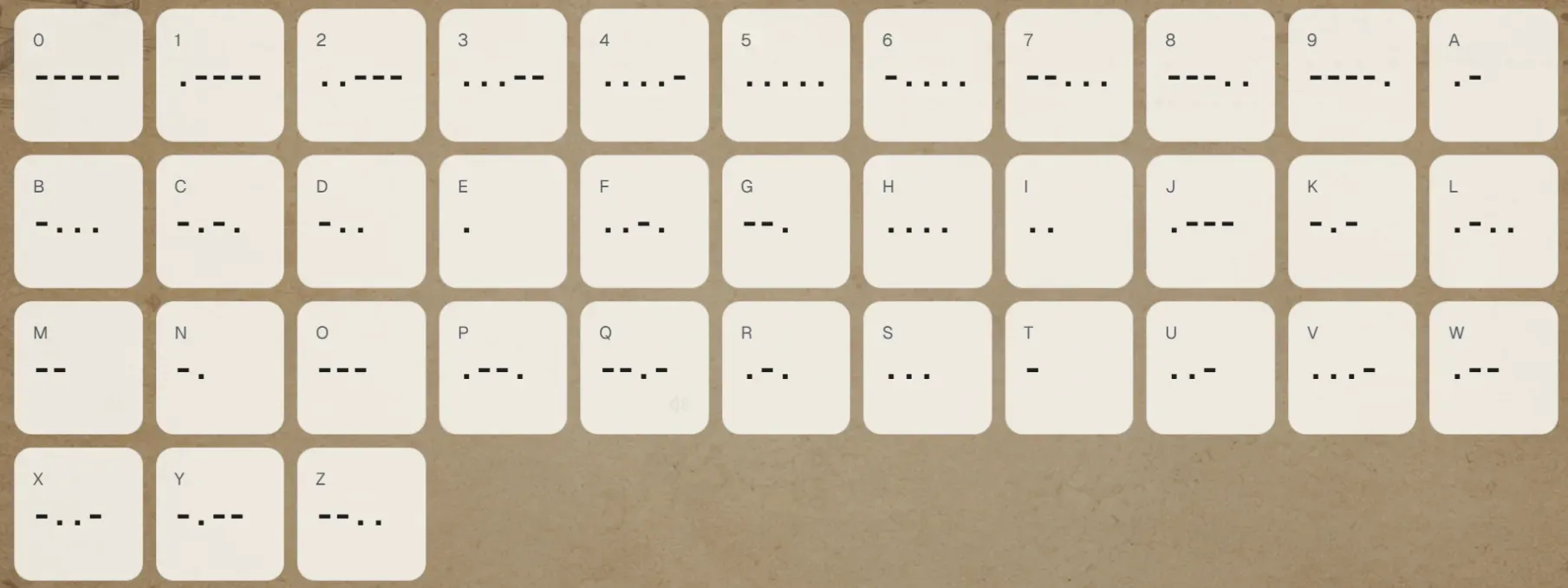
Morse code works by turning written language into timed signals. Each letter, number, and punctuation mark is assigned a unique pattern made from short signals and long signals. On screen these are shown as dots and dashes, but in practice they can be heard as audio tones, seen as flashing light, or felt as vibration.
The meaning does not come from the shape of the symbols alone. It comes from the order of the signals and the spaces between them. For example, E is a single dot, T is a single dash, A is .-, and N is -.. Because every character has a different rhythm, skilled listeners often recognize whole patterns by sound instead of mentally counting each mark.
Morse timing, as defined by theInternational Telecommunication Union (ITU)in its official standard, is built on one unit. A dit lasts one unit, a dah lasts three units, the gap inside a character lasts one unit, the gap between letters lasts three units, and the gap between words lasts seven units.
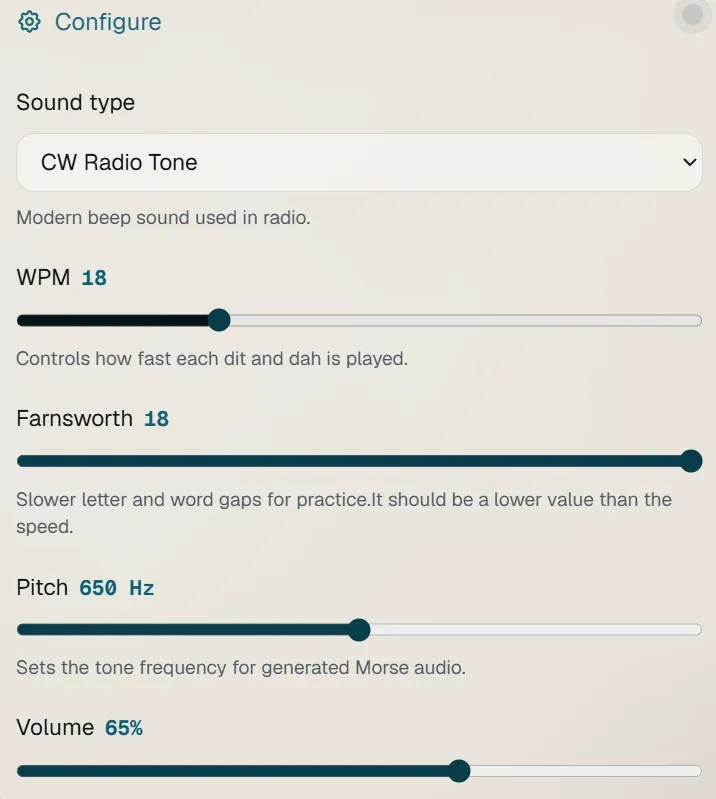
This 1:3 rhythm is why clean Morse audio feels musical. Adjusting WPM changes the length of every timing unit while preserving the relationship between dits, dahs, and spaces. For the complete and authoritative specification, refer to theITU-R M.1677-1 Recommendationon the International Morse code.
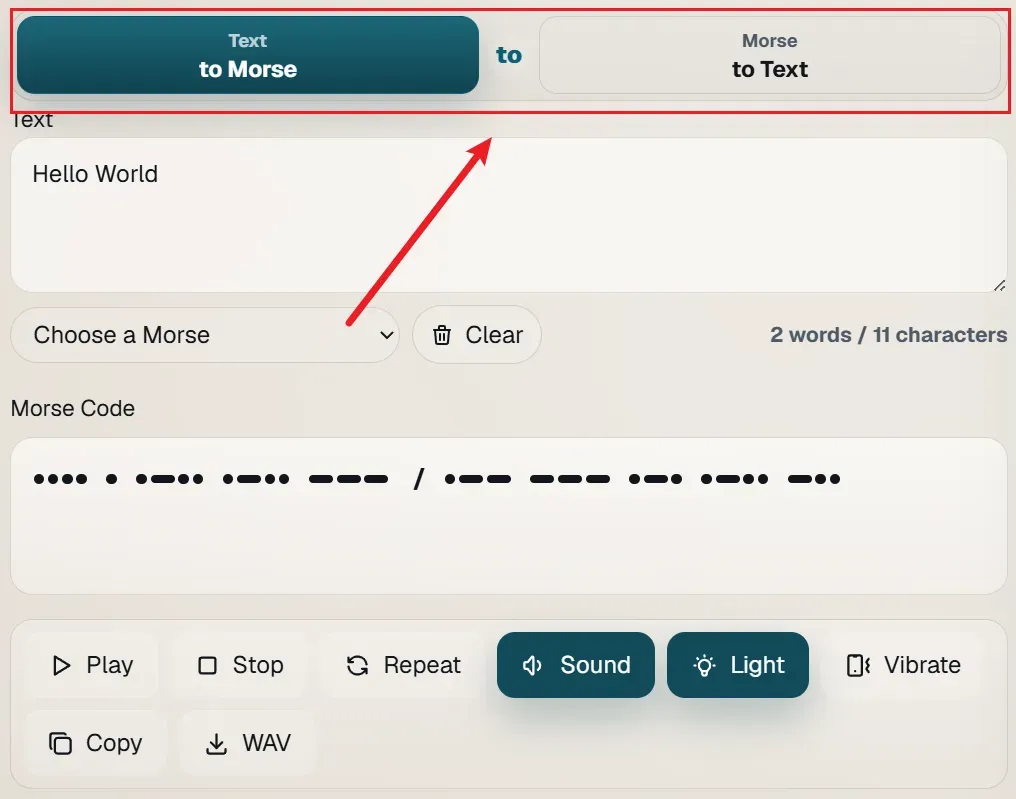
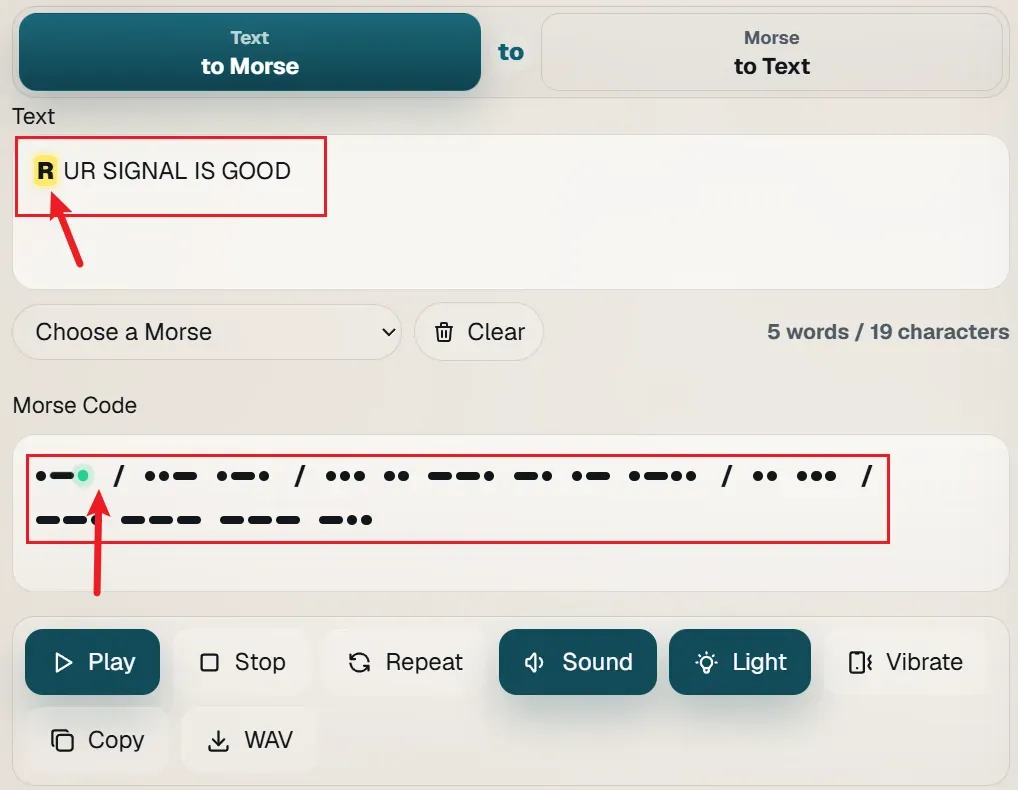
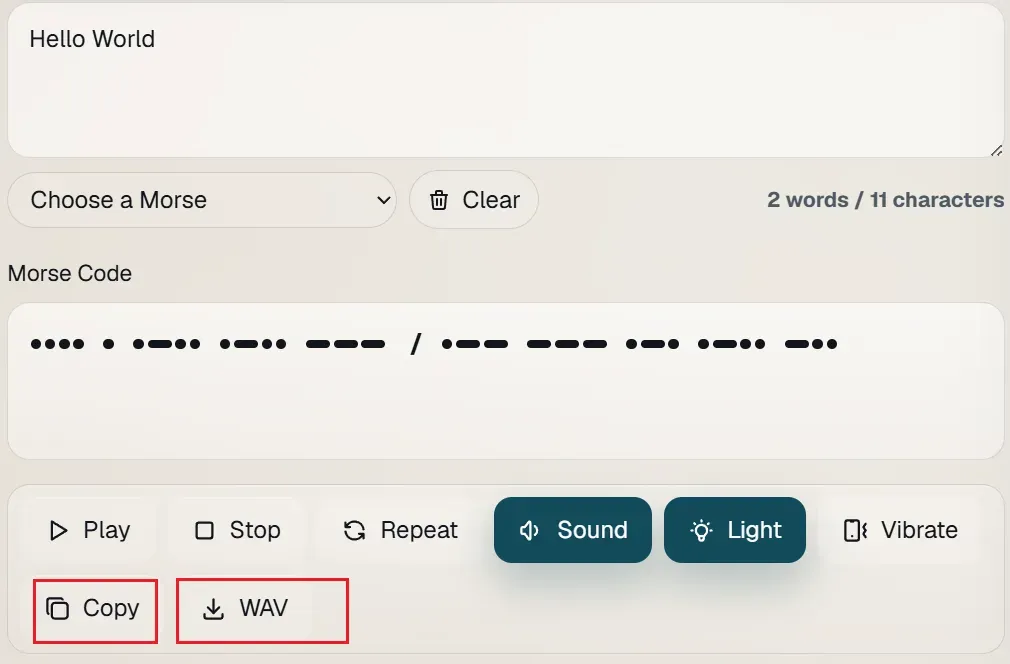
That is why a Morse code translator with live playback is useful for learning. You can see the code, hear the timing, and connect the visual pattern with the actual signal that would be sent over radio, light, or other simple communication methods.
How Morse code is used today
Despite being invented in the 1830s, Morse code remains surprisingly relevant in modern communication. While it is no longer the primary method for commercial shipping or professional telegraphy, the code continues to serve practical purposes across multiple fields where simplicity, reliability, and universality matter most.
Amateur radio and emergency communication
Ham radio operators worldwide still use Morse code for long-distance communication. The signal can travel farther and penetrate noise better than voice transmission, making it invaluable during emergencies when other systems fail. Organizations like the American Radio Relay League (ARRL) continue to promote Morse code proficiency, and operators regularly practice using online tools and Morse code translators to maintain their skills.
Aviation and maritime navigation
Airport navigation beacons and VOR stations transmit their identifier codes in Morse code, allowing pilots to verify they are tuned to the correct station. The Federal Aviation Administration (FAA) maintains these systems as part of the national airspace infrastructure. Some maritime radio beacons also broadcast location information using Morse code patterns that can be decoded by vessels even when voice communication is unreliable.
Assistive technology
Morse code has found a new role in accessibility. People with severe physical disabilities can use adaptive switches to input Morse code — requiring only two distinct signals makes it easier than typing full letters. Modern assistive devices and smartphone apps, including Google's Gboard Morse keyboard, allow users to communicate by tapping Morse patterns, which are then translated into text or speech.
Military and covert communication
Military organizations continue to train personnel in Morse code as a backup communication method. Because Morse signals can be transmitted using light, sound, touch, or even electrical impulses, the code remains useful in situations where conventional communication equipment is unavailable or compromised.
Education and cognitive training
Learning Morse code helps develop pattern recognition, auditory processing, and memory skills. Many schools and STEM programs teach Morse code as an introduction to digital communication, encoding theory, and the history of telecommunications. Using a Morse code translator with audio playback makes the learning process more engaging and accessible for students of all ages.
Whether for practical communication, historical interest, emergency preparedness, or cognitive development, Morse code continues to prove its value as a simple, universal, and resilient communication system. Tools like this Morse code translator help keep the tradition alive while making it accessible to anyone who wants to learn or practice the code.
How to learn Morse code
The fastest way to learn Morse code is to treat it like listening practice, not memorization homework. Start with a small set of common letters such as E, T, A, N, S, and O, then play them at a comfortable speed until their rhythms feel familiar. It is better to recognize the sound pattern immediately than to translate dots and dashes one by one in your head.
Use the controls in this Morse Code Translator to lower or raise WPM, repeat short examples, and compare text with generated Morse code. Practicing with short words like SOS, CODE, and HELLO helps you build confidence before moving to full sentences. Consistent daily practice for a few minutes usually works better than long, tiring sessions.
Once the alphabet feels natural, move on to numbers, punctuation, and real playback drills. Copy the output from the Morse Code Translator, replay it, and test yourself in both directions — from text to Morse code and Morse code to text. This two-way practice, combined with the instant feedback this translator provides, will help you improve much faster than studying with static charts alone.